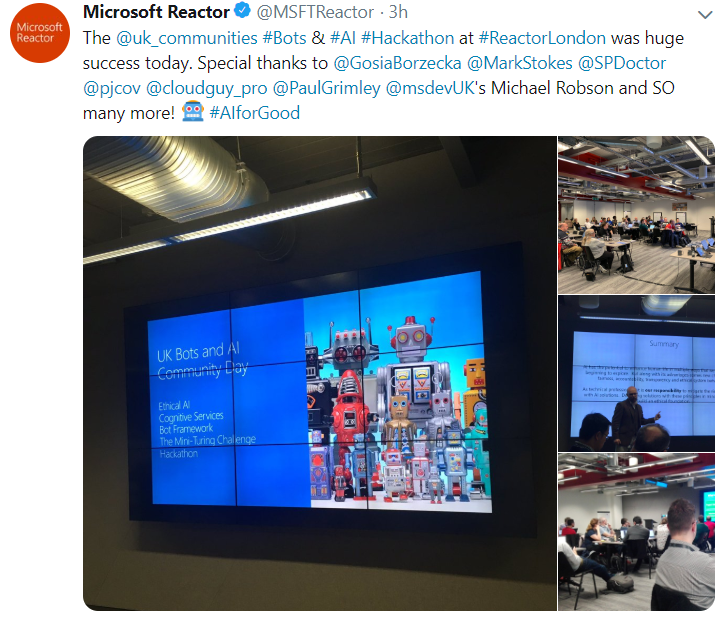
After recently writing about ways to learn, today I went along to one of those ways with the UK Tech Communities Hackathon on Bots and AI. This was a chance to hear from some experts on AI and the Bot Framework in the morning and then work in groups of people who haven’t met before to try and meet a challenge.
What did we learn?
The presentations in the morning covered a range of topics but started with a very interesting talk from Michael Robson on Ethics in AI, reminding us that it is our responsibility as developers and technology implementers to ensure that we consider the impacts of the solutions we create. It is right that Microsoft is putting so much focus on this and pushing to developers to keep thinking, not just mindlessly pushing ahead. This may not guarantee that Terminator doesn’t come true but it helps to do what we can to avoid it.
Experts like Bill Ayers, Gosia Borzecka, Mark Stokes and Stephan Bisser spoke on Cognitive Services and the Bot Framework, keeping us all engaged at the Microsoft Reactor in London. Then, they introduced us to the challenge for the hackathon itself.
Learning by doing
The challenge was to create a Bot from scratch using the Bot Framework to pull information from an FAQ to act as a IT helper. Ultimately, all the teams were able to get something working with a range of people from developers to power users and systems analysts.
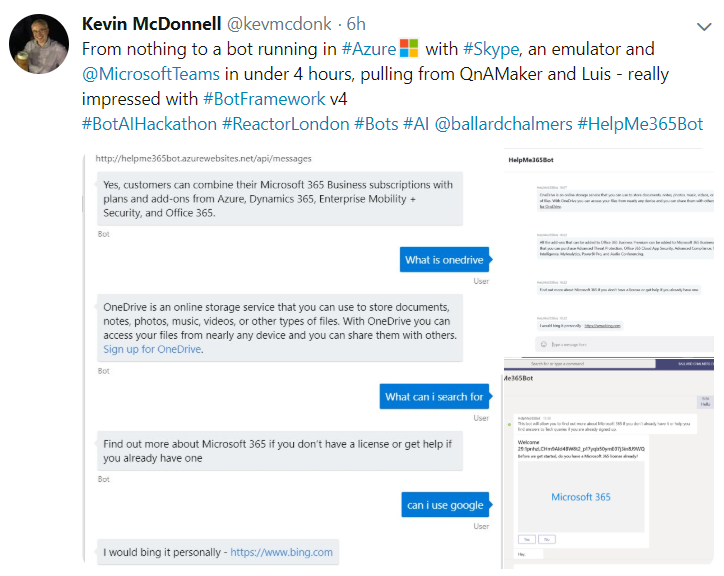
However, the point I am hoping to make here is that all of us learnt from the event by getting hands on. Whether it was the technical detail of using Dispatches in the Bot Framework, how to pull FAQs from a SharePoint list to a Bot or the benefits of using the Language Understanding service to understand intents and entities from natural language.
I came back home energised by others and bubbling with ideas on how I could use my new understanding. Many of the Bots shown were tailored to be for the attendees organisations or clients so people were already applying their thoughts in to reality. Microsoft had advocates and specialists to answer questions and engage with us all, meaning it was not just a case of learning at the pace of a presentation but learning at our own pace too. We learnt from each other, realising what was harder for others to take onboard and what needed more explanation.
If you are interested in trying out a hackathon, sign up for the UK Tech Communities mailing list and get along to their next events or keep an eye on the Microsoft Reactor London site if you are in the UK.